


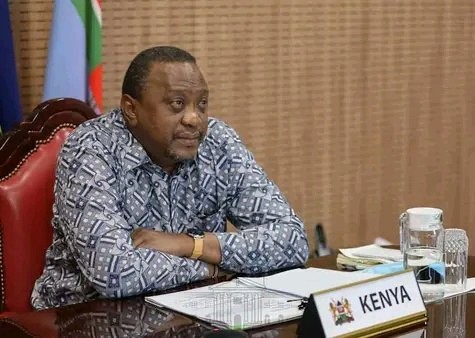
In the dynamic landscape of political and economic governance, President Uhuru Kenyatta’s financial stewardship during challenging times has emerged as a beacon of fiscal prudence.
As the world grappled with the uncertainties brought on by the Covid-19 pandemic, Uhuru’s strategic approach to managing the government’s finances set a remarkable precedent.
One of Uhuru’s key initiatives during the Covid-19 crisis was the implementation of tax relief measures.

This move not only eased the financial burden on citizens but also underscored a commitment to supporting vulnerable families facing economic hardships.
The introduction and funding of kazi mtaani, a program focusing on street work, further demonstrated his dedication to addressing the immediate needs of the community.
One standout feature of Uhuru’s financial strategy was the decision to maintain the fuel tax at 8%, even in the face of soaring global fuel costs.
This decision had a direct impact on pump prices in Kenya, which remarkably remained reasonable, reaching a maximum of 160 bob.
This move, in particular, showcased a proactive stance in shielding citizens from the full brunt of global economic turmoil.
Even in the midst of a severe drought, Uhuru’s administration prioritized the continuity of infrastructure projects and managed to service loans without overburdening the populace.
This nuanced approach ensured that development initiatives continued unabated, illustrating a commitment to the long-term growth and stability of the nation.
In contrast, the present leadership has imposed a substantial tax burden on citizens, introducing charges for services that were previously free, such as ID issuance.

Additionally, despite a global decrease in fuel prices, citizens continue to bear the brunt of steep pump prices. This contrast highlights a departure from the financial strategies employed during Uhuru’s tenure.
A critical concern that has emerged under the current regime is the extensive borrowing by Deputy President Ruto, with questions lingering about the visibility and impact of the development projects funded by these loans.
Uhuru’s fiscal strategy, in this light, stands out as a model of responsible governance during turbulent times.
President Uhuru Kenyatta’s adept financial management during the challenging Covid-19 era reflects a commitment to the welfare of Kenyan citizens.
His strategic decisions, from tax relief to infrastructure investment, stand in contrast to the perceived financial decisions of the current leadership.
As Kenya navigates its economic path, the legacy of Uhuru’s fiscal prudence serves as a reminder of the positive impact that responsible governance can have on a nation’s well-being.
