


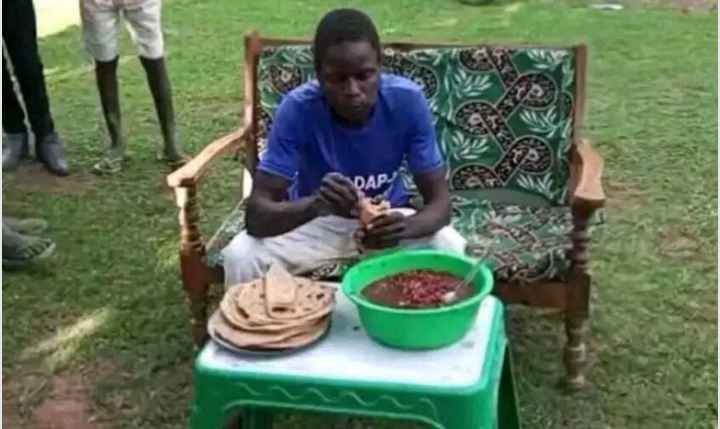
In a surprising turn of events during the annual eating contest in Marakaru, Bungoma County, Wanyonyi, a middle-aged man, achieved fame by devouring 20 chapatis and a hefty 5 kilograms of beans in just 10 minutes.
Crowned the champion, Wanyonyi earned himself free fertilizer and tree seeds.
His astonishing feat has captivated spectators, who gather each year during the tea plantation season to witness this unique competition.
Wanyonyi, unperturbed by the challenge, attributed his success to his innate ability to consume large quantities of food.
Expressing his enthusiasm for future contests, he declared that eating was a genuine pleasure for him.
This eating extravaganza has become a local tradition, drawing attention not only for its entertainment value but also for the rewards bestowed upon the winner.
Wanyonyi’s victory underscores the effort required to consume such copious amounts of food, contrasting with others like Wamalwa, who seem to possess a natural talent for competitive eating.
The Luyha community maintains a cultural norm preventing women from partaking in the consumption of ‘Ingokho,’ a term commonly associated with chicken.
Elders emphasize the importance of preserving cultural beliefs, encouraging young people to engage with elders and understand the reasons behind such norms.
During discussions with Bukusu elders, John Sunguti and Amos Wanjala, the focus shifted to the historical prohibition on women eating chicken, a rule that, though relaxed in modern times, still carries restrictions.
Elders reveal that some parts, like the prized gizzard, remain off-limits for women.
Violating these cultural norms, as illustrated by a case in Ndengelwa, Bungoma County, where a man assaulted his wife for consuming the traditionally male-designated part of the chicken, can lead to severe consequences, even divorce.
Derrick Makhanu, 55, suggests that this prohibition may have originated from a desire for men to enjoy chicken delicacies alone, dispelling health-related myths about women consuming eggs.
However, modern women like Anne, a financial advisor in Bungoma town, challenge these traditions, viewing them as outdated and oppressive.
Anne asserts that education and civilization have empowered women, calling for the reconsideration of cultural beliefs that perpetuate discrimination.
As societal norms evolve, the question arises: Is it time to reassess and potentially discard cultural beliefs that no longer align with contemporary values?
The intersection of tradition, gender dynamics, and evolving perspectives continues to shape discussions within communities like Marakaru, sparking a broader conversation about cultural relevance in the modern era.
