


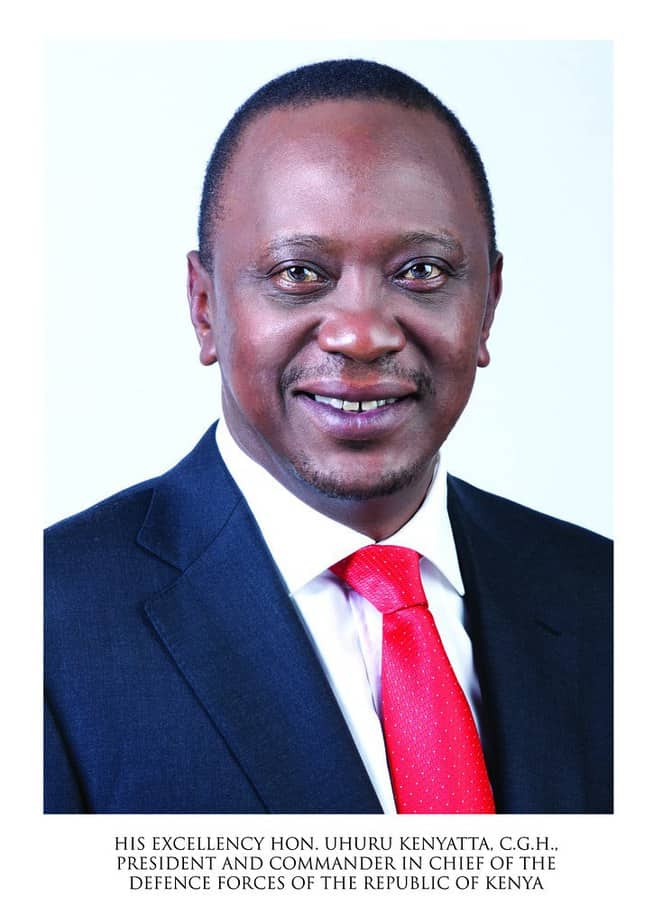

 President Kenyatta could remain in power for nine more months after the end of his official term until a new president is sworn in on May 2, 2023, under two conditions which are in the case where the upcoming August 9 General Election is followed by Supreme Court petitions and secondly possibility of presidential race run-offs.
Research done by constitutional experts show a possible protracted court process and repeat polls, based on multiple poll surveys that show a race too close to call between top contenders Raila Odinga and William Ruto.
Article 142 of the Constitution of Kenya shows that the President will serve for a term beginning on the date he is sworn in and only depart office when his successor is sworn in. Based on necessities the handover scenario is shown in the it, all involving resolution of disputes arising from the presidential election, indicate that Mr Kenyatta could hold power until May 2 next year in the worst-case scenario.
All this however, will depend on whether Supreme Court judges will master the courage and nullify the outcome of the 2022 Presidential election twice, in the event that the voting process is unjust.
During those nine months term, the country will have been subjected not just to a bone-jarring election on August 9 but also to a run-off, two nullifications, and tension-packed, nail-biting four presidential petitions, an eventuality that could pit the best constitutional lawyers against each other in the apex court.
Law body governing office has yet to pass critical laws that the Independent Electoral Boundaries Commission (IEBC) will rely on to conduct the polls, while the Commission has yet to fully address the question of the technology to be used to identify voters and transmit results.
Constitution defenders , who talked to Saturday Nation, say a scenarios of a run-off, nullification and repeat polls are a high possibility because they are contemplated in the Constitution.
They, however, noted that it is impossible for the Supreme Court to overturn a presidential election twice, the 2017 precedent notwithstanding.
Lawyers Bob Mkangi and Adrian Kamotho argue that while such a scenario would be within the constitutional provisions, if it ever plays out, its chances are not very high, unless there is a catastrophic failure on the part of the IEBC.
“The calculations of the scenarios are legit because it is anticipated in the Constitution,” Dr Mkangi said, but added that it will be hard to imagine that the Supreme Court can nullify two consecutive presidential elections.
Based on the constitutional requirement that the outgoing President can only leave after the swearing-in of his successor, the state intelligence system is said to have drawn elaborate scenarios as a form of preparedness to avert a constitutional crisis in the event that the outgoing president is forced to stay in office well beyond the September 3 swearing-in date contemplated in the event of non-contested elections.
“The elaborate chronology of events is provided for in the Constitution to ensure there is no vacuum in the Office of the President. We only hope it doesn’t come to that, but its properly provided for in the Constitution.”
Agreeing with the sentiments, Mr Kamotho argued there is a presumption that the IEBC will learn from the mistakes of the first nullification based on the reasons advanced by the Supreme Court and hold an election that complies with the law. “Only utmost bad faith on the part of the IEBC will lead the Supreme Court to nullify a presidential poll for the second time in a row because the court will have given reasons on the shortcomings that led to first nullification,” Mr Kamotho argued.
“The Supreme court judgment will be more than adequate guidance to the commission and there is no valid reason for a poll to be marred by irregularities that will substantially affect its outcome. Responsible election officials should deliver a proper repeat poll.”
Based on the processes provided in the Constitution, starting with the general election date until a new president is sworn in, the legal experts say six scenarios could play out, paving the way for Mr Kenyatta to delay his exit. They base their analysis on the fact that there will be a challenge in the form of a presidential petition against results announced at all stages and that all the constitutional timelines for activities outlined in the Constitution will be met on the very last day, in tandem with Kenyans’ history of last-minute rush.
The only timeline that might change, according to the projections, is that of announcing the final presidential results. While the law obligates the commission to announce the final results within seven days, it also opens a window for it to declare the results anytime once the leading candidate opens an unassailable lead.
President Kenyatta could exit the stage less than a month after the polls, as soon as on September 3. But this is based on the assumption that his successor will register a resounding first-round win, complete with the required 50 per cent+1 threshold. The experts also foresee a scenario where there will be a presidential petition, but the Supreme Court will not overturn the outcome as announced by the commission.
“Overturning presidential elections is not a daily cup of tea, notwithstanding the grounds cited,” said Dr Manyora, citing statistics that indicate outcomes that have been overturned in Africa only in Malawi and Kenya.
