


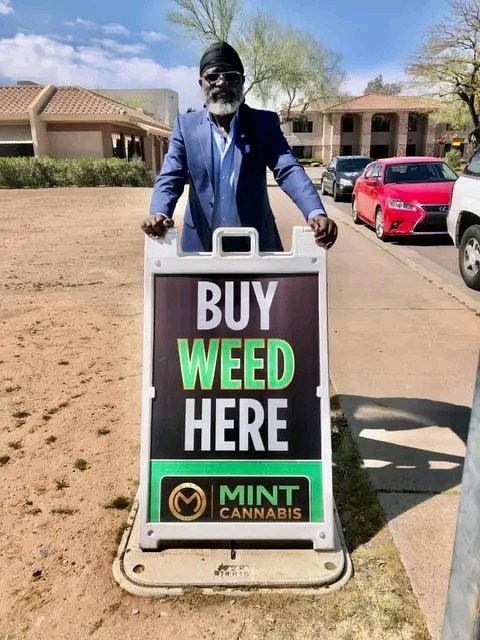
Former presidential candidate George Luchiri Wajackoyah has stirred up a storm of reactions across Kenyan social media with his recent declaration regarding the cannabis industry.
In a bold move, Wajackoyah shared photos of himself visiting a weed company in America, sparking a flurry of responses from netizens.

The outspoken politician wasted no time in highlighting the economic significance of the cannabis industry, emphasizing its role in generating employment opportunities for thousands of individuals in America.
Furthermore, Wajackoyah made striking claims about the innovative use of cannabis in construction, asserting that countries like Canada and Taiwan are exploring its potential as a sustainable alternative to traditional building materials.

A powerful Kenyan lawyer and seasoned politician, Prof. Luchiri Wajackoyah’s foray into the realm of cannabis advocacy has raised eyebrows and ignited debate among Kenyans.
Despite his defeat in the previous general election, Wajackoyah remains a prominent figure in the political landscape, known for his outspokenness and willingness to challenge the status quo.

The revelation of Wajackoyah’s visit to a weed company in America has prompted a diverse range of reactions from netizens, reflecting the polarizing nature of the cannabis debate.
While some applaud his progressive stance on cannabis legalization and its potential economic benefits, others express skepticism and caution regarding the societal implications of embracing the cannabis industry.
Among the reactions, one Kenyan netizen succinctly encapsulated the sentiment of skepticism, exclaiming, “Achana Na Weed Mkuu” (“Leave the weed alone, boss”).

This response underscores the prevailing apprehension and moral reservations surrounding the legalization and commercialization of cannabis in Kenya.
As Wajackoyah’s declaration continues to reverberate across social media platforms, it has reignited discussions about the future of cannabis legislation and regulation in Kenya.
With increasing global momentum toward cannabis legalization and recognition of its economic potential, the debate within Kenya is poised to intensify in the coming days and weeks.

The controversy surrounding Prof. Wajackoyah’s declaration serves as a microcosm of the broader discourse on cannabis legalization and its implications for society, economy, and governance.
As Kenya grapples with these complex issues, the voices of citizens and policymakers alike will play a crucial role in shaping the trajectory of cannabis policy in the country.