


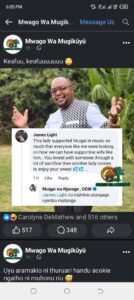
Kenyan artist Muigai Wa Njoroge has stirred controversy with his fiery response to a fan’s comment about his recent divorce from his first wife, Njeri Muigai.
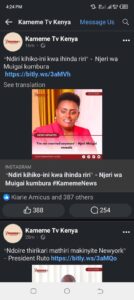
Njeri publicly announced the end of her marriage to Muigai, sparking discussions among fans about the dynamics of their relationship.
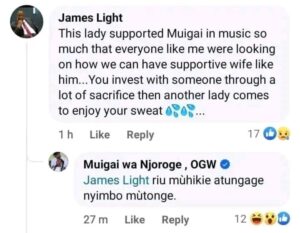
The fan, identified as James Light, took to social media to express admiration for Njeri’s unwavering support of Muigai’s music career.

James acknowledged Njeri’s instrumental role in Muigai’s success in the music industry, expressing disappointment that, despite her contributions, another woman would now reap the benefits.
Muigai’s response to James’s comment took an unexpected turn as he sarcastically suggested that James should take Njeri as his wife, benefiting from her support in writing music.
He went on to predict substantial wealth if James managed to have Njeri support him in his musical endeavors.
The artist’s response elicited a range of reactions from followers. Some supported Muigai, asserting his right to defend his personal life from unwarranted comments.
On the other hand, critics expressed disapproval of Muigai’s harsh and disrespectful tone, suggesting that a more mature response would have been appropriate.
The public discourse surrounding Muigai’s relationship with Njeri sheds light on the challenges faced by public figures when their personal lives become subject to public scrutiny.
It also prompts reflection on the boundaries of fan engagement and the responsibility of artists to navigate and respond to unsolicited commentary on their personal matters.
The incident raises questions about the delicate balance between maintaining privacy and engaging with fans, highlighting the need for artists to establish boundaries while recognizing the impact their public image has on followers.
It underscores the complexities of navigating personal relationships in the public eye and the challenges artists face in addressing public inquiries about their personal lives.
As the discussion unfolds, Muigai’s response serves as a case study in the ongoing dialogue about the expectations placed on public figures and their right to set boundaries in the realm of social media.
The incident not only sparks debates about appropriate fan engagement but also prompts a broader conversation about the challenges artists encounter when their personal lives intersect with their public personas.
