


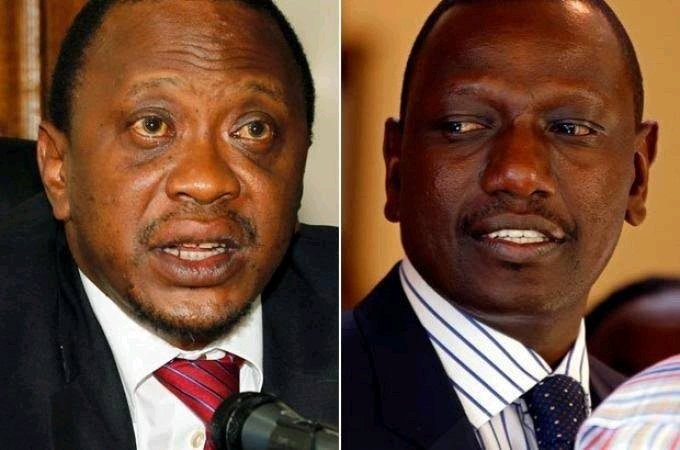
In a revealing analysis by prominent blogger Pauline Njoroge, a stark juxtaposition emerges between the borrowing patterns of former President Uhuru Kenyatta and the current administration led by President William Ruto.
Njoroge, drawing on her extensive experience in the public sector, sheds light on the financial landscape, raising pertinent questions about the impact of these borrowing strategies on Kenya’s development.
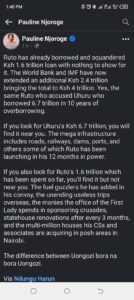
According to Njoroge, President Ruto has reportedly amassed a staggering 1.6 trillion in loans within a mere year, with an additional 2.4 trillion extension from the International Monetary Fund (IMF), bringing the total to a staggering 4 trillion.
This stark contrast is heightened by the fact that Ruto, who once criticized Uhuru for accumulating 6.7 trillion in a decade, now faces scrutiny for surpassing that amount within a significantly shorter timeframe.
Njoroge underscores the tangible outcomes of Uhuru’s borrowing spree, citing mega infrastructure projects such as roads, dams, ports, and more.
In contrast, she contends that Ruto’s 1.6 trillion expenditure lacks substantial, visible projects, contributing to the growing hardships faced by the Kenyan populace.
The blogger further alleges that Ruto’s utilization of funds raises concerns, pointing to allocations for convoys, political campaigns, statehouse renovations, and property acquisitions for Cabinet Secretaries.
This expenditure, according to Njoroge, falls short of delivering tangible benefits to the citizens, fueling a discourse on responsible financial governance.
The question posed is whether the borrowed funds are being optimally utilized for the nation’s development or diverted towards less impactful endeavors.
Njoroge invites readers to share their opinions in the comments section, fostering a dialogue on the implications of these borrowing practices for Kenya’s economic trajectory.
As the nation navigates these financial dynamics, the public discourse intensifies, shaping perceptions of leadership and fiscal responsibility.
