


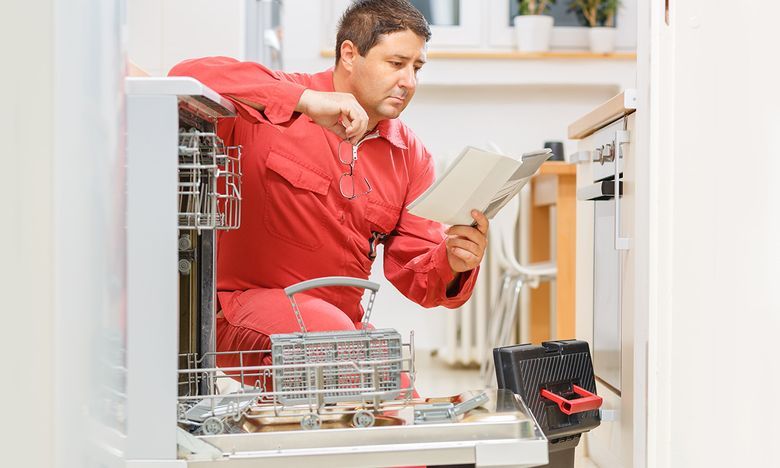
A dishwasher that won’t drain is a common problem that can be frustrating and messy. Fortunately, you can fix it yourself with some simple tools and tips. Here are eight easy steps to follow when your dishwasher won’t drain.
Step 1: Run the Disposal
Sometimes, a full garbage disposal or an air gap in a connecting hose can prevent water from draining out of the dishwasher. To fix this, run the disposal for a few seconds to clear any clogs or debris. Then, check the air gap, which is a small device near the faucet that prevents backflow. If you see any water or food particles coming out of the air gap, clean it with a wire coat hanger or a screwdriver.
Step 2: Check for Blockages
Another common cause of a dishwasher not draining is a blockage in the drain hose or the filter. To check the drain hose, disconnect it from the pump and try to blow through it. If you can’t, there might be a kink or a clog in the hose. Straighten any kinks and clear any clogs with a wire coat hanger or a plunger.
To check the filter, locate it at the bottom of the tub, surrounding the base of the lower spray arm, or at the back. Remove it by unscrewing it or lifting it out, and clean it under running water. Remove any food debris or paper labels that might be stuck in the filter.

Step 3: Load the Dishwasher Correctly
Sometimes, the way you load your dishwasher can affect its draining performance. Make sure you scrape off any large food particles from your dishes before loading them. Don’t overload the dishwasher or block the spray arms with large items. Also, use the correct amount and type of detergent for your dishwasher model and water hardness.
Step 4: Clean or Change the Filter
The filter is an important part of your dishwasher that prevents food particles from clogging the pump and the drain hose. However, over time, the filter can get dirty and reduce the water flow. To keep your filter in good condition, you should clean it weekly by running it under a tap and replacing it back into the machine.
If your filter is damaged or worn out, you might need to replace it with a new one. You can find replacement filters online or at appliance parts stores. Make sure you get the right filter for your dishwasher model and follow the manufacturer’s instructions on how to install it.
Step 5: Inspect the Drain Hose
The drain hose is the tube that connects your dishwasher to the sink drain or the garbage disposal. If this hose is damaged, kinked, or clogged, it can prevent water from draining out of your dishwasher. To inspect the drain hose, you need to disconnect it from both ends and check for any cracks, holes, or blockages.
If you find any damage or clogs in the drain hose, you need to replace it with a new one. You can buy a new drain hose online or at appliance parts stores. Make sure you get the right size and length for your dishwasher model and follow the manufacturer’s instructions on how to install it.
Step 6: Double-check the Drain Valve
Some dishwashers have a drain valve that keeps water from draining back into the machine. If this valve is stuck or broken, it can prevent water from draining out of your dishwasher. To check the drain valve, you need to locate it at the bottom of your dishwasher near the pump.
To test if the valve is working properly, push on its bracket and see if it moves freely. If it doesn’t move or makes a humming noise, it might be frozen or burned out. In that case, you need to replace it with a new one. You can find replacement drain valves online or at appliance parts stores. Make sure you get
