


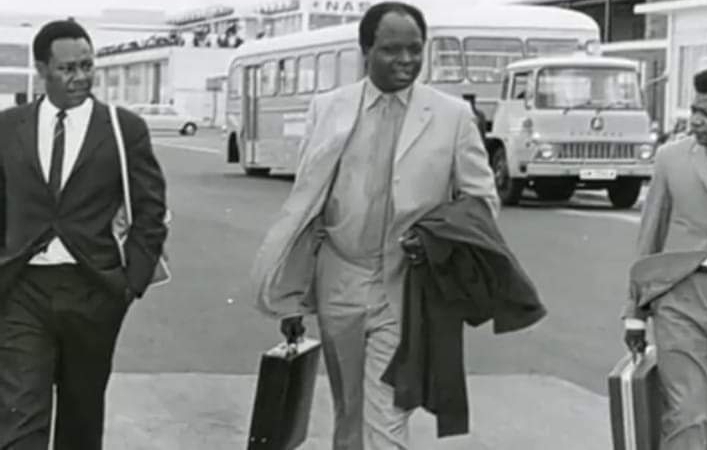
Kibaki, was among the first lot of Kenyans to attend the then prestigious Makerere University in Uganda, where he attained a B.A in 1955.
Throughgovernment scholarship on account of his brilliant academic performance, he proceeded to the London School of Economics and graduated with a B.Sc. in 1957.
He then worked as a teacher before being absorbed as lecturer at his alma mata, Makerere University. Kibaki did not have to be persuaded so much by the Kanu deputy leader Jaramogi Oginga,and Burudi Nabwera to join the independence movement. He voluntarily relinquished his intellectually stimulating career in academia and became active in the Kenyan struggle for independence from Great Britain.
He believed that he would make much better contribution to education of his countrymen by taking a leading role in establishing the first African government for Kenya.
After Kenya became independent in 1963, he won a seat in the National Assembly as a Kanu member. In Parliament and the Cabinet, he was crucial in the development of the early national policies.
He worked closely with founding President Jomo Kenyatta together with Kenya’s national policy guru of all times, Tom Mboya. Kibaki later served as minister of Finance where from his stewardship, the country witnessed steady economic growth and development.
He then earned a scholarship entitling him to undertake postgraduate studies at any British university. He chose the London School of Economics, from which he obtained a BSc in public finance, with distinction. In 1958, he went back to Makerere, where he taught as an assistant lecturer in the economics department until 1961.
Here he’s seen with friends going back to Uganda as a lecturer in 1958
