


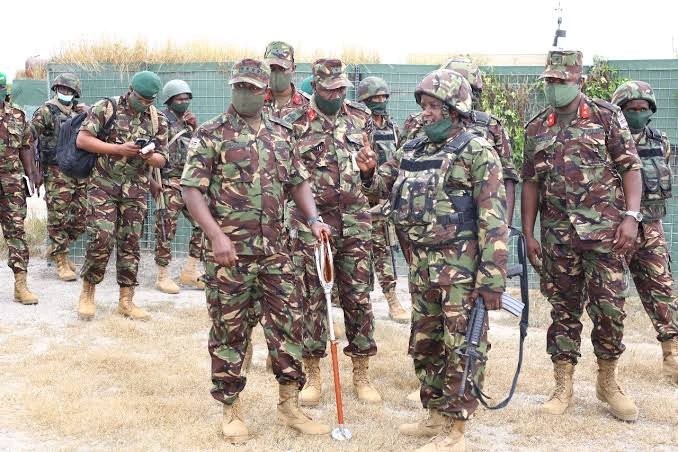
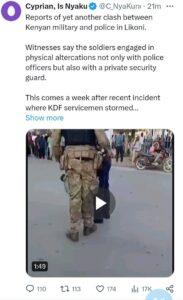
In yet another unsettling incident in Likoni, reports have surfaced of a physical altercation involving Kenyan military personnel, police officers, and even a private security guard.
This latest clash adds to a series of recent confrontations, including a dramatic rescue mission at Lodwar Police Station just a week prior.
As Kenyans await explanations from the Department of Defense (DOD), the nation is left pondering the implications of such confrontations within its security apparatus.
The question on many minds is how the DOD will justify the actions of its personnel this time.
With tensions already heightened from previous incidents, the spotlight is once again on the authorities to provide clarity and ensure accountability.
The recurring nature of these clashes raises concerns about the state of collaboration and professionalism among Kenya’s security forces.
In response to the unfolding events, Kenyans have expressed a spectrum of opinions. Some, like Samwel Wekesa, uphold the image of the Kenya Defense Forces (KDF) as a disciplined force, advocating for harmonious collaboration with the national police.
However, others, such as Allano, question the legitimacy of the military’s engagement with civilian law enforcement, suggesting a breakdown in discipline and protocol.

The sentiment echoed by Koech warns of a looming crisis within the KDF if such confrontations persist unchecked.
Beyond the immediate concerns of public safety and inter-agency cooperation, these incidents have broader implications for Kenya’s security landscape.
They underscore the importance of clear protocols and effective communication channels between different branches of the security apparatus.
Moreover, they highlight the need for robust oversight mechanisms to prevent escalations and maintain public trust.
From a strategic standpoint, the DOD faces the challenge of addressing underlying tensions and restoring confidence in its personnel’s conduct.
This involves not only investigating the specifics of each incident but also implementing measures to prevent similar occurrences in the future.
Additionally, transparent communication with the public is essential to foster understanding and mitigate speculation surrounding the motives behind these clashes.
As Kenya grapples with the aftermath of yet another clash between its military and police, the nation stands at a crossroads.
How the authorities choose to navigate these challenges will not only shape the dynamics within the security sector but also impact public perceptions of law enforcement and national security.
In the face of adversity, the resilience and adaptability of Kenya’s institutions will be put to the test, with the hope that lessons learned will pave the way for a more united and secure future.
