


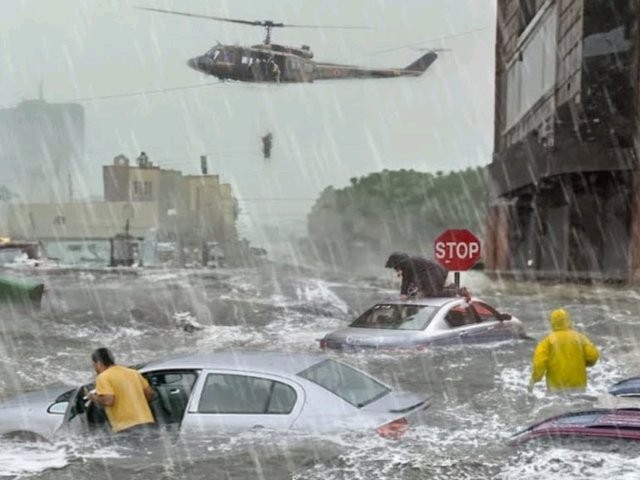
Dubai, known for its arid climate, was thrown into chaos on Tuesday as unprecedented flash floods wreaked havoc across the city.
Shocking footage captured the surreal sight of Dubai International Airport, one of the world’s busiest hubs, submerged under water, with aircraft navigating through the deluge like boats in a river.
The torrential rain, which lasted for 12 hours, unleashed nearly 100 millimeters of rainfall – an amount typically seen over the course of an entire year in Dubai.
This extreme weather event caught residents and authorities off guard, leading to widespread disruption of daily life and infrastructure.
The impact of the floods was felt most acutely at Dubai International Airport, where operations were severely disrupted.
Access roads became impassable, and major airlines, including Emirates and Flydubai, reported flight delays and cancellations.
Stranded passengers were forced to spend the night at the airport, highlighting the magnitude of the situation.
Videos circulated on social media depicted scenes of chaos as water surged through streets, turning roads into rivers and inundating homes and businesses.
Motorists were left stranded as vehicles were engulfed by floodwaters, forcing some to abandon their cars altogether.
The unprecedented rainfall also affected major landmarks, with footage showing water rushing through shopping malls and flooding ground floors of residential buildings.
The scale of the flooding underscored the vulnerability of Dubai’s infrastructure to extreme weather events and raised concerns about the city’s preparedness for such emergencies.
Interestingly, the heavy rains were partially attributed to the United Arab Emirates’ cloud seeding operations, which have been ongoing since 2002 to address water security issues.
By deploying seeding planes to stimulate rain from convective cloud formations, authorities hoped to mitigate water scarcity in the desert nation.
Ahmed Habib, a specialist meteorologist, revealed that seeding planes had conducted seven missions over two days, capitalizing on atmospheric conditions conducive to rainfall.
Despite the disruption caused by the floods, Dubai’s media office characterized the downpours as “rains of goodness,” emphasizing the potential benefits for water resources in the region.
As Dubai grapples with the aftermath of the flash floods, questions arise about the city’s resilience in the face of climate change-induced extreme weather events.
The incident serves as a stark reminder of the need for proactive measures to enhance infrastructure resilience and mitigate the impact of future disasters.
