


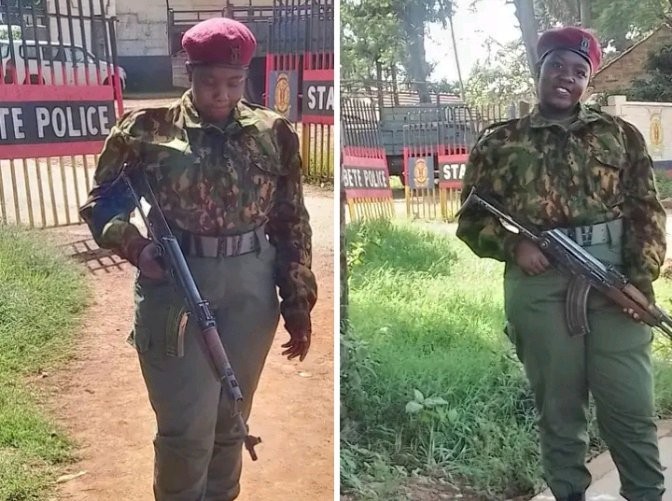
In a bizarre turn of events that has left Kenyans both bewildered and amused, news has surfaced of a twenty-two-year-old woman who was apprehended for impersonating police officers.
The incident, which unfolded in Busia, has become a topic of widespread discussion, with citizens expressing a mix of astonishment and humor.
According to credible sources, the young woman, identified as Jacinta Merlin Ouma, was captured donning complete General Service Unit (GSU) regalia along with a rifle.

Law enforcement authorities acted swiftly upon receiving a tip-off from vigilant members of the public, leading to her arrest.
Jacinta now faces a twenty-one-day remand period to facilitate thorough investigations by the police.
The revelation that Jacinta had been operating from various pokie stations in Busia County has added a layer of intrigue to the unfolding story.
The audacity of her impersonation has prompted a spectrum of reactions from Kenyans online.
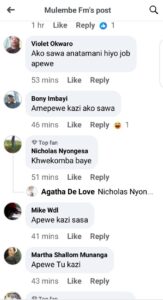
Some individuals came to her defense, suggesting that the Busia government should consider offering her a job, while others staunchly sided with law enforcement, emphasizing the severity of impersonation as a criminal offense in the country.

The images of Jacinta in full GSU regalia have circulated widely on social media, sparking a flurry of memes and humorous commentary.
The incident has become a source of amusement for many, as they grapple with the surreal nature of the situation.
Memes featuring Jacinta photoshopped into various law enforcement scenarios have flooded online platforms, contributing to the overall lighthearted tone of public discourse surrounding the incident.
While some netizens find humor in the situation, it is crucial to underscore the gravity of impersonating police officers.
The act not only poses a potential threat to public safety but also undermines the trust citizens place in law enforcement agencies.
As the legal proceedings unfold during Jacinta’s remand period, authorities will delve into the motives behind her impersonation and assess any potential risks associated with her actions.
The contrasting opinions expressed by Kenyans online highlight the complexity of public perception in such cases.
While some advocate for empathy and a reconsideration of her circumstances, others emphasize the rule of law and the need for stringent consequences for impersonation.
This incident serves as a reminder of the diverse perspectives that emerge in the digital age, where social media becomes a battleground for opinions and reactions.
As Jacinta’s case progresses, the nation watches with a curious mixture of fascination and concern, contemplating the peculiar circumstances that led to this unusual impersonation.
The incident, now etched in the collective consciousness of Kenyans, adds a unique chapter to the annals of peculiar occurrences in the country’s recent history.
