



Kileleshwa MCA Robert Alai has strongly criticized nominated UDA senator Karen Nyamu following a controversial incident that has recently surfaced.
The incident, captured in a viral video, shows Nyamu engaging with Nairobi youth concerning their demolished stores.
However, the focus shifted abruptly as an unintended wardrobe malfunction unfolded.
In the video, Nyamu’s innerwear became partly visible from behind as she interacted with the youth.

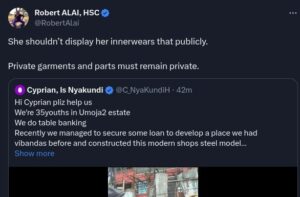
Alai, a prominent member of ODM, expressed his disapproval, emphasizing, “She shouldn’t display her inner wears that publicly. Private garments and parts must remain private.”
This incident has ignited a heated debate about the appropriateness of public figures’ attire during official engagements.
Nyamu’s attempt to address the concerns of the affected youth took an unexpected turn, triggering discussions about professionalism and public decorum among elected officials.
As reactions pour in, the incident serves as a stark reminder of the intense scrutiny public figures face in the age of social media.
The viral nature of the video has amplified the discourse, bringing attention to the responsibilities and expectations placed on individuals holding public office.
The incident raises questions about the blurred lines between personal and public life for politicians.
Critics argue that elected officials should maintain a high level of professionalism even in informal settings, as their actions can influence public perception and trust.
The controversy surrounding Nyamu’s unintentional exposure underscores the challenges faced by politicians in navigating the ever-watchful eyes of the public.
Social media, in particular, has become a powerful platform for instantaneous dissemination of such incidents, making it imperative for public figures to be mindful of their actions at all times.
Furthermore, this incident highlights the need for a broader discussion on the intersection of personal freedom and public responsibility.

While individuals have the right to express themselves, especially in private settings, the public nature of political roles demands a careful balance to preserve the dignity and integrity of elected officials.
The ongoing discourse is not only about Nyamu’s actions but also about the broader implications for political figures in an era where every move is scrutinized and shared widely.
It remains to be seen how this incident will impact public perception of Nyamu and the expectations placed on politicians in terms of their behavior both in and out of official duties.
