


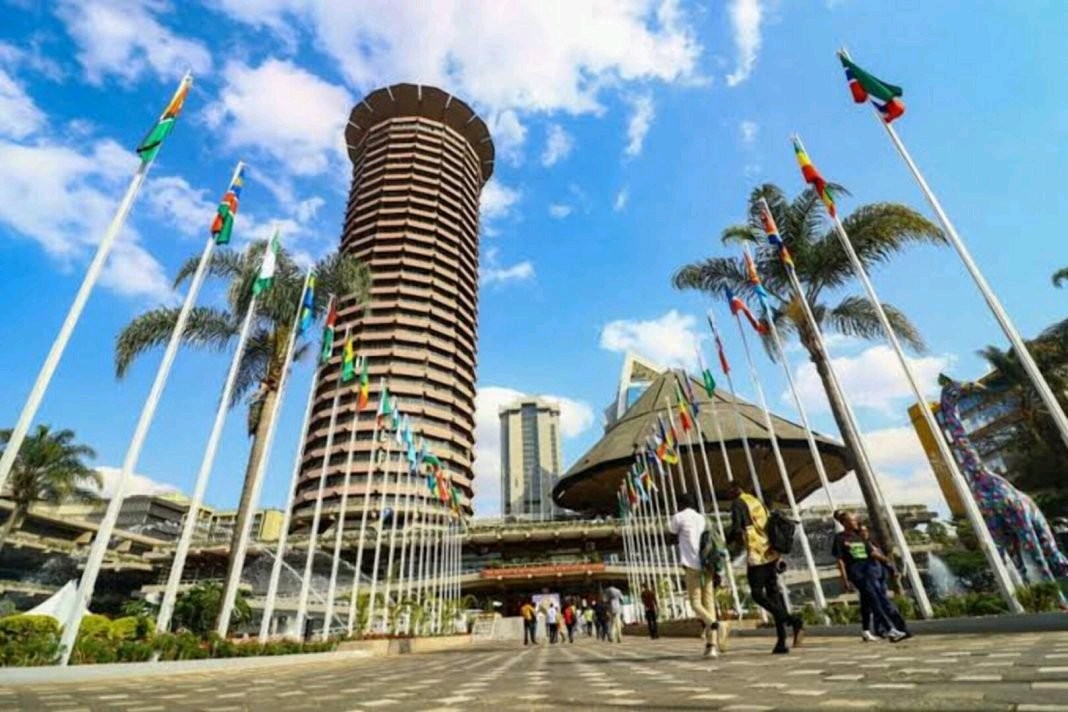
Kenyan government, led by President William Ruto, is facing widespread criticism for its proposed sale of the iconic Kenyatta International Convention Centre (KICC).
The decision has sparked outrage among citizens who view the sale as an unjustifiable disposal of a national asset that holds significant cultural and historical value.
President Ruto defended the controversial decision in a recent media interview, asserting that the KICC is valued at Sh. 30 billion and should be generating an annual revenue of Sh. 3 billion.
“Do you know how much money we should be making from KICC if it is worth Sh. 30 billion? Even nominally, we should be getting Sh. 3 billion a year. How much are we getting? We are getting Sh. 29 million,” stated President Ruto during the interview.
However, conflicting figures have emerged, challenging the president’s claims.
The latest records from the Auditor General reveal that the actual value of KICC is approximately Sh. 6.25 billion, significantly lower than the alleged Sh. 30 billion.
This revelation has intensified the public’s skepticism and fueled accusations of misinformation.
Adding another layer to the controversy, the financial records of KICC for the fiscal year 2020 paint a different financial picture.
The convention centre reported a turnover of Sh. 1 billion and a net profit of Sh. 37.39 million.
These figures diverge significantly from President Ruto’s assertions, prompting concerns about the accuracy of the information provided by the government.
Critics argue that the proposed sale not only raises questions about the transparency of the government’s decision-making process but also highlights potential discrepancies in the valuation of national assets.
Many Kenyans contend that KICC is more than a mere economic entity; it represents a national identity and a symbol of pride for the country.
The public outcry has prompted calls for a comprehensive review of the decision, demanding transparency in the valuation process and a thorough examination of the government’s justifications for the sale.
Advocacy groups and concerned citizens are mobilizing to protect what they see as an integral part of Kenya’s heritage.
As the controversy continues to unfold, the fate of KICC hangs in the balance, with citizens and stakeholders closely monitoring developments and seeking assurances that any decision regarding the iconic convention centre is made in the best interest of the nation.
