


During the 60th Jamhuri Day celebrations at Uhuru Gardens, President William Samoei Ruto addressed the nation, highlighting the Kenya Kwanza government’s reform initiatives.
However, the commemoration took an unexpected turn when activist Julius Kamau sought to interrupt the president’s speech, leading to prompt intervention by security forces.

Captured in circulating online photos, security officers swiftly handled Julius Kamau, who attempted to disrupt the presidential address.
This incident stirred diverse reactions among Kenyans, with some contending that President Ruto should have listened to Kamau, viewing him as a representative of the people’s voice.
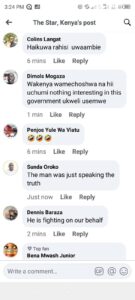
The Star shared screenshots on social media, depicting the moment of security intervention with activist Julius Kamau.
The online post became a focal point for public engagement, with the comments section reflecting a spectrum of opinions among Kenyans.

The incident added an unexpected layer of complexity to the Jamhuri Day celebrations, injecting a moment of tension and debate into the festivities.
Amid the controversy, discussions emerged regarding the role of activism in national events and the appropriate response of authorities to dissenting voices.
Some argued for a more inclusive approach, suggesting that addressing Kamau’s concerns could have diffused tensions and fostered dialogue.
The incident underscored the delicate balance between maintaining order and accommodating divergent opinions within the public sphere.

The engagement and discourse surrounding this disruption highlighted the challenges faced by leaders in navigating the fine line between security measures and respecting the right to free expression.
As Kenyans reflected on the disruption during the commemoration, the episode became a talking point, contributing to a nuanced dialogue on civic engagement, protest rights, and the role of security forces in public events.
The incident’s ripple effects continued to resonate in the aftermath of Jamhuri Day, emphasizing the ongoing importance of open discourse in shaping the nation’s narrative.