



KIBERA…
Kibera(Kibra)or kibish was and remains a British creation. Its origins lie in Colonial times, when Nairobi was founded to house British Colonial offices and the headquarters of the new Uganda Railway line in 1899.
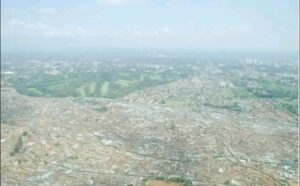
Nairobi was intended only for Europeans, with non-Europeans required by law to live in ‘native reserves’ on the outskirts of the city. Kibera appeared as the settlement allocated to the Nubian soldiers serving the military interests of the British Colonial army.
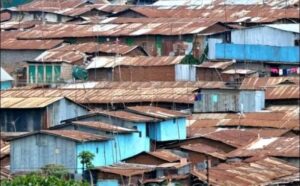
Kibera~ translates as forest or a wooded area in the Nubian language and references its original state as a forest settlement (the trees have long since disappeared).
Following Kenya’s successful transition to independence in 1963, the government designated Kibera as an unauthorised settlement. This gave the tenants no rights to their homes or land and absolved the government of any responsibility to provide basic infrastructure.

Kibera became a place for those who could not afford legal housing. Many came from the rural villages, dreaming of making it big in the city. As such, Kibera is full of ambitious and entrepreneurial people as well as a much greater mix of origins than anywhere else in Kenya.
The number of people living in Kibera is unknown and quoted as anywhere between 170,000 and 1.2 million.
A 2.5 square kilometre region that lies 7km from central Nairobi and is closely bounded by more affluent areas.
Kibera is a British creation dating back to 1899. It was designated as an unauthorised settlement following Kenya’s independence in 1963.
The consequence is that the Kenyan government have no obligation to provide basic services and infrastructure, and the residents have no rights over their property.
Kibera slum area is made up of ‘villages’. The most widely accepted definition of Kibera’s boundaries includes 12 villages:
*Gatwekera *Soweto *Makina *Kisumu Ndogo *Kicchinjio *Laini Saba *Silanga *Lindi *Kianda *Mashimoni *Raila *Kambi Muru.It remains to be one of the biggest urban slum villages in Africa.
