


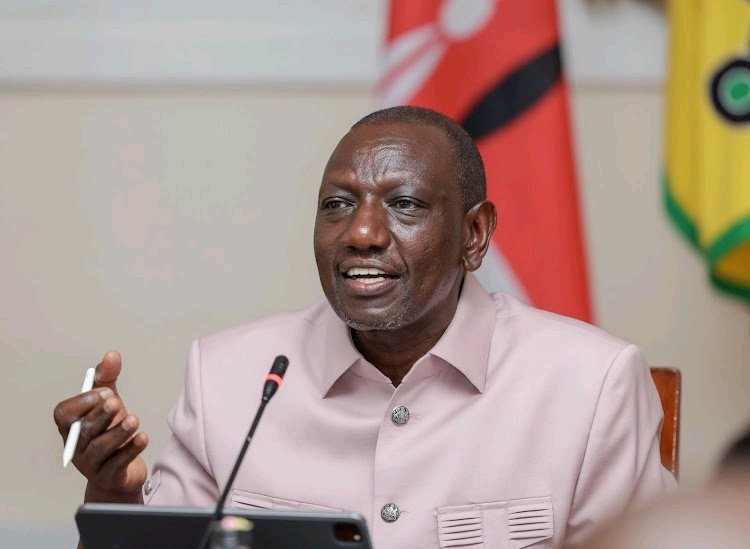
President William Ruto’s recent decision to reverse a previous move has stirred political and administrative waves in Kenya.
Ruto had initially sought to correct the actions of his predecessor, Uhuru Kenyatta, by transferring the Kenya Meat Commission (KMC) from the Ministry of Defence to the Ministry of Agriculture.
However, just one year later, Ruto has made a U-turn, returning the management of KMC to the Ministry of Defence.
This decision has raised several questions and speculation about the motivations behind the abrupt reversal.
The official reason for this U-turn remains undisclosed, leaving room for interpretation and analysis.
Some observers suggest that President Ruto may have come to the conclusion that KMC’s operations are better suited under the Ministry of Defence for improved efficiency and management.
The initial transfer of KMC to the Ministry of Agriculture had been viewed as a bold move by Ruto, aimed at rectifying perceived shortcomings in his predecessor’s administration.
However, the recent reversal has left many perplexed, as it seemingly contradicts the earlier decision and aligns with the approach adopted during Uhuru Kenyatta’s tenure.
This shift in policy has not only political ramifications but also practical implications for the administration of KMC.
The commission plays a pivotal role in the meat industry of Kenya, responsible for regulating and overseeing meat production and trade.
The decision to transfer its management between ministries has a significant impact on the industry’s stakeholders, including farmers, traders, and consumers.
Moreover, President Ruto’s about-face on this issue has political implications.
It raises questions about the motivations behind his initial decision to transfer KMC and the subsequent reversal.
Some speculate that the initial move was politically driven, an attempt to differentiate his administration from Kenyatta’s and demonstrate a commitment to change.
However, this sudden reversal has led to accusations that Ruto may have been making decisions merely to undermine his predecessor rather than based on sound policy considerations.
It also serves as a reminder of the complexities and challenges that come with political transitions and governance in Kenya.
The country has a history of leadership changes and political rivalries that often result in policy reversals and uncertainty.
President Ruto’s U-turn on the KMC issue highlights the difficulties of balancing continuity with change in a political landscape marked by competing interests and alliances.
President Ruto’s decision to transfer KMC back to the Ministry of Defence puts his predecessor, Uhuru Kenyatta, in a favorable light, as it suggests that Kenyatta’s initial placement of KMC under the Ministry of Defence was perhaps the right course of action.
This decision has put Ruto in a challenging position, as it may be perceived as an admission that his initial decision was ill-conceived or hastily made.
President William Ruto’s recent decision to transfer the Kenya Meat Commission back to the Ministry of Defence has generated significant attention and debate in Kenya.
The reasons behind this U-turn remain unclear, but it raises questions about the motivations behind his initial move and the impact on the meat industry and political landscape.
This development underscores the complexities of governance and political rivalries in Kenya, where leadership transitions can lead to significant policy shifts and uncertainty.
