


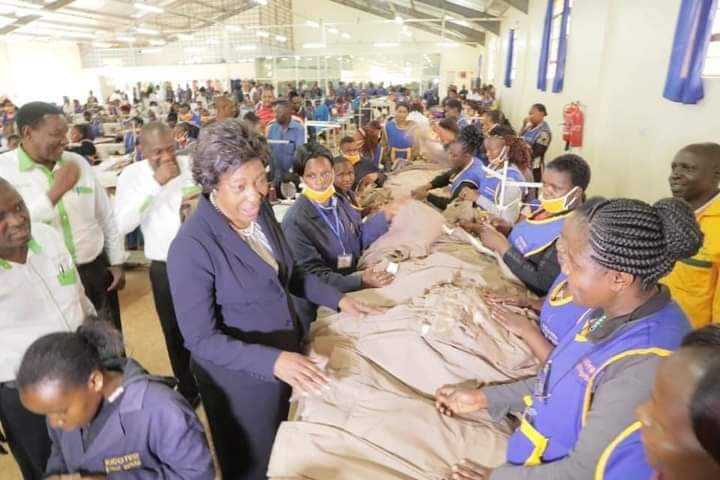
THE REVIVAL OF THE COTTAGE INDUSTRY IN KENYA.
From early 1930s towards late 1990s, cotton and sisal farming was a common activities in Nyanza,central, western, N.Eastern,and Coastal Province. Sisal was however grown in a comparatively smaller scale in Nyanza and western province, while cotton growing was widespread and in large scale in notable regions like Nyakach, Seme, Uyoma, Sakwa , Asembo,Mumias,teso, webuye, busia amongothers.
Cotton didn’t pay much then as it does today but again cotton farming has completely died in Nyanza and the entire country.
There was KICOMI which became the leading cotton consumer of the Cotton grown in the Western Kenya region but KICOMI too collapsed, and that’s a long story,Salawa in Baringo collapsed,Asego Holding Ltd collapsed, Malakisi in Busia Ginnery collapsed ,Luanda Ginnery collapsed,Rift Valley Product Ginnery in Kerio valley collapsed among others like Malindi Ginnery,Gitau Ginnery etc etc.
Fast forward, we’ve seen the government supporting RIVATEX to rise again.
We would do justice to other Ginneries as well by we the people, private investors, researchers and Agricultural experts teaming to bring back all Ginneries to life and also other strong cottage industries however small in their scale.
The first person who has risen to occasion in this need to wake up our potential in the cottage industries in Nyanza,Rift Valley, Western North Eastern and Coastal region is Eng. Raila Odinga , in Azimio government
Raila Odinga intends to include cotton farming along with his already established sugarcane,tea coffee, pyrethrum, tobacco,livestock etc etc keeping in his basket of projects for Kenya youths and women.
Amolo Tinga intends to revive cotton growing and in the meantime before having our cotton ready, he has a well structured plan on how to import cotton from Uganda , Burkina Faso,Tanzanian, Mali,Egypt, Ethiopia and Senegal before we gradually abolition importation of cotton and consume our locally grown cotton.
In this plan, he has a clear design on production of baby pampers, ladies sanitary towels, toiletries and kitchen saviettes using cotton.
The employment target to work in this initiative are the local youth who are college, ploytechnic and university students who are still on-going with their training, who will be working in small groups and later after the project has gained good momentum, then it can be commercialised vastly.
This will keep them engaged, earn them some income to support their studies since it appears there are so many college students who are educating themselves whether orphaned or with parents because of the current financial situation in the country.
It will also save them from the financial depression and mental health issues that are a real time problems in our tertiary learning institutions.
The 5th is looking forward to cotton farming scheme in which not only the two common varieties of cotton in Kenya is grown, that is HART 89M and KSA 81M but instead introduce a suitable Gossypium variety, BT cotton and the suitable hybrid cotton that can grow on our soils locally.
With such forward thinking and progressive minds that has a clear foresight into the future, we are sure we can be headed the right direction in terms of large scale commercial agriculture, employment creation for the vast jobless population and improvement of livelihoods and living standards.
