


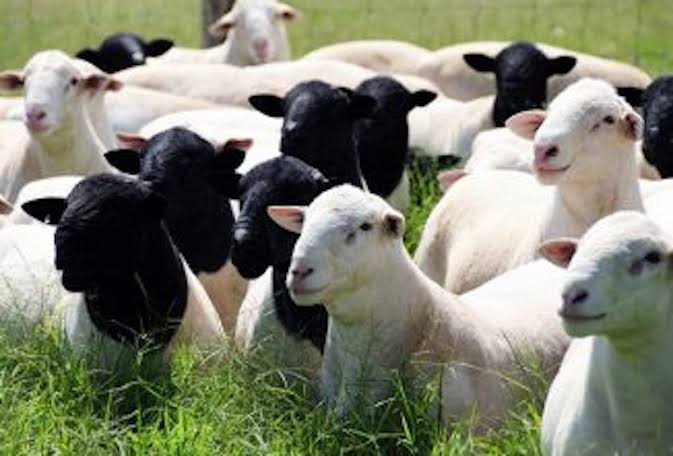
David Kiplagat, a member of parliament, is raking in millions through the sale of Dorper sheep, at a price of up to Ksh200,000 each. Farmers in Kenya are increasingly interested in raising Dorper sheep, a South African variety with strong commercial potential.
The Dorper breed is prized for its rapid development, resilience, prolificacy, and the high quality of its lean meat.
Based on their characteristics, Dorper sheep are assigned grades, with Grade 1 being the highest possible.
David Kiplagat, owner of DK Dorper Breeding Farm and Member of Parliament for Soy, is a pioneer in this movement.
Kiplagat started out cultivating Dorpers after studying the achievements of South African breeders extensively.
Four years ago, at a cost of Sh140,000, he purchased a high-quality ram from South Africa in an effort to boost sheep production in Kenya.
Over the years, he has improved his farm’s sheep herd from Grade 4 Dorpers to Grades 3 and 2, with Grade 1 as the ultimate goal by 2026.
Our goal is to solely produce grade one animals by 2026, and we have been gradually improving breeds to get there. Kiplagat told the Standard that this achievement will be a major turning point for his team.
Premium rates of up to 5 million Kenyan Shillings are paid for Grade 1 Dorper sheep because to their superior characteristics in reproduction, weight gain, and meat quality.
David Kiplagat, an MP for the Soy seat, did substantial research on the history and progress of Dorper breeding in South Africa before launching the Dorper initiative.
I established my Dorper farm with the goal of boosting national sheep output. Concerning the price disparity, Kiplagat remarked, “I noticed with concern that most breeds that local farmers had were those weighing between 10 and 20 kilograms and would fetch between Sh6,000 and Sh15,000.” This is in contrast to the price of a South African Dorper, which can reach upto Sh200,000.
Successful Farm Administration
The health and production of the sheep at DK Dorper Breeding Farm are guaranteed by the farm’s careful management.
The animals live in spacious, well-planned barns with designated areas for their age, gender, nutritional requirements, and growth stage.
Kiplagat’s farm has produced high-quality rams that sell for anywhere from Sh50,000 to Sh200,000 thanks to the owners’ careful tending.
When the number of rams increases, we coil the flock and use the ewes for incubation. Prices for rams range from Sh50,000 to Sh60,000 for those between four and six months old, Sh100,000 for those between one and a year old, and Sh170,000 to $200,000 for those between two and a half and three years old, as explained by Kiplagat.
Kiplagat has a skilled veterinary manager who monitors the sheep’s health and diet to ensure consistent quality.
Tick infestations can be avoided with the use of preventative measures including acaricide spraying and routine vaccination and deworming programs.
Younger flocks are protected from contracting pneumonia by being housed in warmer conditions.
Prospects Going Forward and Suggestions for Breeders.
Kiplagat hopes that one day Kenya would be able to achieve the same high standards of quality as South Africa.
He is confident that with the right investments and dedication to improvement, local breeders can raise superior Dorper sheep and increase their market value.
Kiplagat provides helpful guidance for future breeders. The idea is to start small so that the learning curve is reasonable and the dangers are kept to a minimum.
“Sheep farming doesn’t require a large plot of land. On our tiny 0.2 acre property, we have 400 sheep. If you want to make it, you need to stop expecting instant gratification. The payoffs will come if you’re patient and consistent. With enough willpower and dedication, anything can be accomplished. We went from a level 4 to a level 1 in just four years,” boasts Kiplagat.
Kiplagat plans to implement AI for sheep in Kenya in the near future so that they can be bred like cattle. This breakthrough would reduce the high expense of importing rams while giving farmers access to better sheep genetics.
